
If your boiler is limping through another winter and you’re wondering whether the government will chip in to replace it, the short answer is complicated. In 2026, there is no direct gas boiler replacement grant in Ireland. What is available are SEAI grants that fund heat pumps, insulation, heating controls, and full home energy upgrades.
We’ve pulled this together from SEAI guidance, current grant values, and what we see on the ground in Dublin homes every week. Let’s get into it.
What Gas Boiler Replacement Grants are Available in 2026?
In 2026, SEAI does not offer a grant for replacing a boiler with another fossil fuel boiler. There are a few heating system upgrade grants through the One Stop Shop scheme. Free upgrades exist for lower-income households under Warmer Homes.
Here’s a plain-English breakdown of what’s on offer through SEAI in 2026:
- Air-to-water heat pump grant of up to €6,500 when replacing a fossil fuel system.
- Heating controls grant of €700 when installed alongside other measures.
- Attic insulation grant from €800 to €1,700 depending on property type.
- Cavity wall insulation grant from €700 to €1,700.
- One Stop Shop bonus of up to €2,000 for a full deep retrofit to BER B2 or better.
- Warmer Homes Scheme offering fully funded upgrades for eligible households.
Grant values are set by SEAI and updated periodically. Always confirm current figures on the official SEAI grants section before committing.
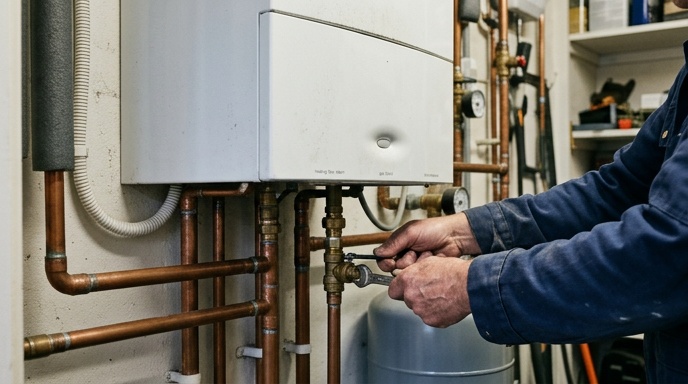
Can I Get a Grant to Replace My Gas or Oil Boiler in 2026?
Not with a like-for-like swap. Irish government policy is steering homes away from fossil fuel heating, so grants only apply if you’re moving to a lower-carbon system. Replacing a gas boiler with another gas boiler, or oil with oil, is paid entirely by the homeowner.
That said, there are a few situations where partial funding is possible even if you’re keeping a boiler:
Upgrading Heating Controls Alongside Other Works
If your boiler is being replaced as part of a wider upgrade that includes new insulation or a new heating control system, the controls portion may qualify for a €700 grant. The boiler itself is not funded, but the surrounding works can offset the total cost.
Going the One Stop Shop Route
If your home needs a serious upgrade, the One Stop Shop scheme bundles insulation, ventilation, heating controls, and a heat pump into one project with SEAI managing the paperwork. Homeowners typically save around 35% of total project cost through combined grants.
Qualifying for Warmer Homes
Households in receipt of certain social welfare payments can access SEAI-administered energy schemes that fully fund insulation and, in some cases, heating system upgrades. It’s worth checking eligibility even if you think you won’t qualify.
How Does the Heat Pump Grant Work?
The SEAI heat pump grant provides up to €6,500 toward the cost of installing an air-to-water heat pump in a home currently heated by a fossil fuel boiler. Your home must first pass a technical assessment showing it’s suitable for a heat pump, which usually means a decent level of insulation and airtightness.
The process runs in a clear order:
- Book a Technical Assessment with an SEAI-registered assessor. This typically costs €200 to €300 and is partially grant-funded.
- Receive a Heat Loss Indicator (HLI) result. Your home must score 2.3 W/K/m² or lower to qualify without additional insulation works.
- If your HLI is too high, upgrade insulation first to bring the score down.
- Choose an SEAI-registered heat pump installer and get a quote.
- Apply for the grant before works begin. Applying after installation invalidates the claim.
- Works are completed and inspected. Grant is paid to the homeowner after sign-off.
A typical air-to-water heat pump installation in an Irish home costs between €12,000 and €18,000 before the grant, depending on system size and pipework changes. After the €6,500 grant, homeowners are usually looking at €5,500 to €11,500 out of pocket.
Who Is Eligible for SEAI Grants in 2026?
SEAI grants are available to homeowners of properties built and occupied before 2011 for most measures, and before 2021 for the heat pump grant. The home must be your primary residence or a rental property, and the works must be carried out by an SEAI-registered contractor.
Core eligibility rules to be aware of:
- The property must be located in the Republic of Ireland.
- You must own the home or have written permission from the owner.
- Works must be carried out by a registered contractor from the SEAI list.
- Grant applications must be submitted before works commence.
- The home must have a valid BER assessment completed after the works.
- Landlord-owned properties are eligible, but the landlord must apply, not the tenant.
What About Newer Homes?
If your home was built after 2011, most SEAI insulation grants don’t apply because newer builds are already assumed to meet a decent energy standard. The heat pump grant has a slightly wider window, covering homes built before 2021.
Rental Properties
Landlords can claim SEAI grants for rental properties, and the tax treatment differs from owner-occupier claims. For landlord-specific compliance advice, Citizens Information’s grant guidance is a good starting point before making an application.
What Does Boiler Replacement Actually Cost Without a Grant?
Replacing a gas boiler in a typical Irish home costs between €2,500 and €4,500 including labour, pipework, valves, insulation, and the boiler itself. Oil boiler replacement runs slightly higher, generally €3,500 to €5,500, due to the additional tank and pump work.
Costs vary based on several factors:
- Whether you’re keeping the same fuel type or switching.
- The output rating and brand of the new boiler.
- Whether pipework and radiators need upgrading.
- How accessible the boiler location is.
- Whether new heating controls or a smart thermostat are added.
- Whether a power flush is needed to clear sludge from the system.
If your existing system is more than 15 years old, a power flush is usually a good idea before fitting a new boiler. It stops sludge from the old radiators clogging the new unit and voiding the warranty.

Should I Switch to a Heat Pump or Stick With a Boiler?
It depends on your home’s insulation level, your budget, and how long you plan to stay.
- Choose a heat pump if your home is well insulated, has a BER of C or better, and you can afford the upfront investment.
- Choose a new gas or oil boiler if your home needs significant insulation work first, or if budget is tight.
- Choose an electric boiler if you’re in a small property, don’t have a gas connection, and heating demand is modest.
- Consider the One Stop Shop if you’re planning to overhaul insulation, heating, and windows together.
Getting the decision right depends on your specific home. If you’d like an honest assessment of what fits your setup, budget, and timeline, get in touch with our team for a no-obligation site visit and quote.