
If you’re weighing up a new boiler this year, the first question is usually the same. Is there a grant to help with the cost? The honest answer for 2026 is that Ireland does not offer a direct cash grant to swap a gas or oil boiler for a newer gas or oil boiler. What is available instead is funding for cleaner heating systems and deep home upgrades, which can replace your old boiler as part of a wider project.
Under the current SEAI schemes, homeowners can access grants for heat pumps, solar thermal, and fully funded upgrades through the Warmer Homes Scheme. The old-style boiler-for-boiler grant no longer exists. That shift matters, because it changes how you should plan your next heating decision.
Below is a straight-talking guide to what boiler replacement grants in Ireland 2026 actually cover, who qualifies, and where the real savings sit. We’ll also flag the pitfalls we see on the ground every week when homeowners assume support is available and find out too late that it isn’t.
Are There Direct Boiler Replacement Grants in Ireland in 2026?
No, there is no direct grant to replace an old gas or oil boiler with a new gas or oil boiler in Ireland in 2026. Government funding under SEAI is now focused on moving homes away from fossil fuels, so support is aimed at heat pumps, insulation, and full home energy upgrades rather than like-for-like boiler swaps.
That said, several schemes will still cover the cost of removing your old boiler if it forms part of a bigger upgrade. So while the boiler itself isn’t the grant target, the switchover often is.
- Heat Pump Systems Grant up to €6,500 for a full air-to-water or ground-source system.
- Warmer Homes Scheme fully funded upgrades for eligible households.
- One Stop Shop Service bundled grants covering insulation, heat pumps, ventilation, and controls.
- Solar Thermal Grant of €1,200 for hot water solar panels.
You can review the full current scheme list on the official SEAI home energy grants page, which is updated when rates or eligibility change.

What Grants Can Replace a Boiler as Part of an Upgrade?
Three routes let you effectively fund a boiler replacement, provided you’re willing to change your heating system type. Each has different qualifying rules and different upfront costs, so pick the one that fits your home and budget rather than the one with the biggest headline number.
Heat Pump Systems Grant
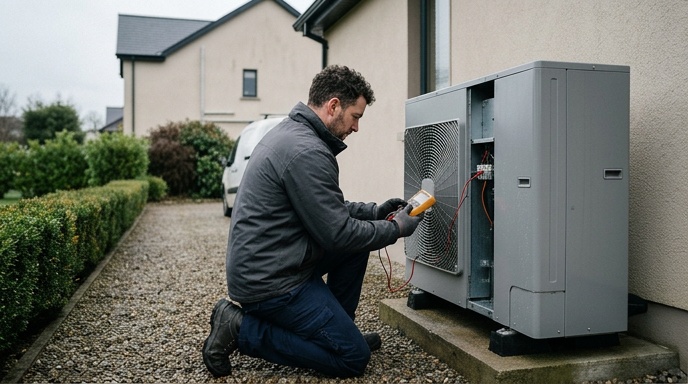
The Heat Pump Systems Grant offers €6,500 towards installing an air-to-water or ground-source heat pump. To qualify, your home must have been built and occupied before 2021 and must pass a technical assessment showing the heat loss is low enough for a heat pump to work well.
- Grant amount: €6,500 for a full system.
- Technical assessment: mandatory, and separately grant-aided at €200.
- BER requirement: your home needs a heat loss indicator below a set threshold.
Most homes need insulation upgrades before a heat pump will perform properly. That means the real project cost is often €25,000 to €35,000 before grants, which surprises a lot of people.
Warmer Homes Scheme
The Warmer Homes Scheme is a fully funded upgrade for households receiving certain social welfare payments. If you qualify, SEAI arranges and pays for the works, which can include attic and wall insulation, ventilation, a new heating system, and in some cases a heat pump or boiler replacement.
Waiting lists are long, often over two years, so apply early. Full eligibility is set out on Citizens Information housing grants, which explains the qualifying payments in plain terms.
One Stop Shop Service
The One Stop Shop route bundles multiple grants into one project managed by an SEAI-registered provider. It’s aimed at deep retrofits where insulation, airtightness, ventilation, and a heat pump are done together to bring the home to a B2 BER or higher.
Grants under this route can total €25,000 or more depending on the scope, but the homeowner still pays a meaningful share upfront.
Who Qualifies for These Grants?
Qualification depends on the scheme, but three tests come up again and again. Age of the home, current BER, and in some cases household income or welfare status. Get these confirmed before you commit to any works, because retrofitting the wrong order can void a grant.
- Home age: most SEAI grants require the home was built and first occupied before 2021.
- Ownership: you must own the property or have the owner’s permission. Rented homes have separate rules.
- BER assessment: a pre-works BER is required, and a post-works BER is needed to release final payment.
- Registered contractor: all works must be done by an SEAI-registered installer. DIY does not qualify.
For gas work specifically, the installer must also be RGI registered. That’s a legal requirement for any gas boiler decommissioning or fuel switch, not just a nice-to-have. You can verify any installer on the RGII register before letting them touch your system.
How Much Does a Boiler Replacement Actually Cost in 2026?
A straight boiler replacement in Dublin typically ranges from around €2,500 for a basic gas boiler swap up to €4,500 for a high-efficiency condensing boiler with new controls and a system flush. Oil boiler replacements run slightly higher due to tank and flue work. Heat pump installs sit in a different league entirely.
Here’s a rough guide based on what we quote around Dublin week to week.
- Gas boiler like-for-like: €2,500 to €3,500.
- Gas boiler with system upgrade and power flush: €3,500 to €4,500.
- Oil boiler replacement: €3,000 to €5,000.
- Electric boiler swap: €2,000 to €3,500.
- Full air-to-water heat pump: €18,000 to €25,000 before grant, roughly €11,500 to €18,500 after grant.
The grant maths only stacks up for heat pumps when your home is already reasonably well insulated. If not, factor in another €10,000 to €15,000 of enabling works. For most homeowners with a broken boiler and no time to plan a deep retrofit, a straight gas or oil replacement remains the practical choice, even without a grant.
Common Mistakes Homeowners Make With Boiler Grants
The number of people who start works before the grant is approved is genuinely surprising. SEAI grants are approved in advance, not reimbursed after the fact. Start the job first and you lose the grant. Full stop.
- Starting works before grant approval: instant disqualification.
- Using an unregistered installer: no SEAI-registered contractor, no grant.
- Skipping the BER assessment: no pre-works BER means the file can’t be closed out.
- Assuming heat pumps suit any house: without proper insulation, they run inefficiently and cost more to operate than a modern gas boiler.
- Ignoring the technical assessment result: if your heat loss is too high, no amount of grant funding will make a heat pump the right call.
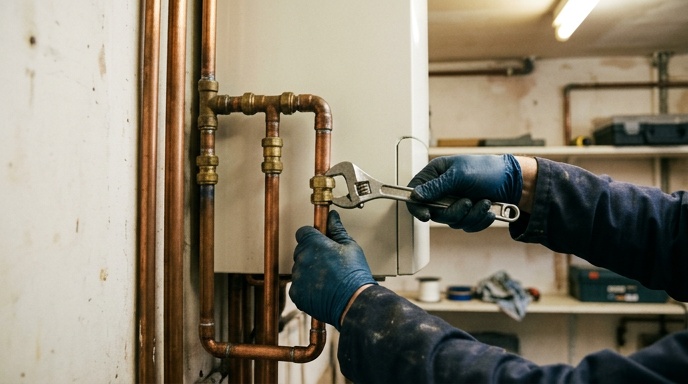
If your existing boiler has failed and you need heat back on this week, a like-for-like replacement by an RGI-registered plumber is usually the right move. Grants are for planned upgrades, not emergencies.
How to Apply for a Boiler Replacement Grant
The application process is straightforward once you know the order. Apply first, wait for approval, do the works with a registered installer, then submit for payment. Skipping steps or reordering them is the single most common reason claims get refused.
- Check eligibility on the SEAI grants page and confirm your home meets age and BER criteria.
- Get a BER assessment done by a registered assessor.
- Choose an SEAI-registered installer for heat pumps or a One Stop Shop provider for bundled works.
- Submit the grant application online and wait for written approval before starting.
- Complete the works, get the post-works BER, and submit the claim for payment.
If you’re unsure which route suits your home, a qualified installer can walk you through the options during a site visit. Talk to our team for a straight assessment of whether a grant-backed upgrade or a like-for-like replacement makes more sense for your property.
Is a New Boiler or a Heat Pump the Better Choice?
The right answer depends on your home’s insulation, your budget, and how long you plan to stay. A heat pump is the long-term energy-efficient option and attracts the biggest grant. But it only performs well in a well-insulated house, and the upfront cost is significantly higher than a gas or oil boiler even after the grant.
For a typical 1990s semi-detached with average insulation, a new high-efficiency gas boiler often gives better real-world value over the next ten years. For a well-insulated home, or one you’re already retrofitting, the heat pump route makes strong sense.
Book a site assessment with a qualified heating engineer before you commit either way. A ten-minute chat about heat loss, radiator sizing, and hot water demand will save you thousands in either direction.